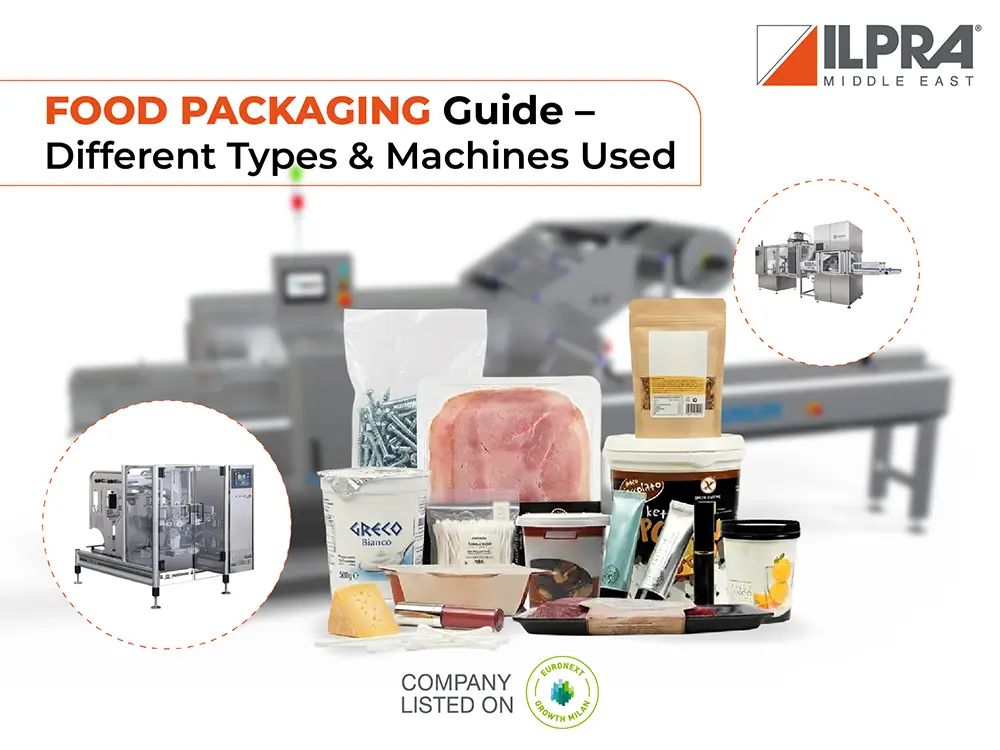
Food Packaging Guide – Different Types & Machines Used
Food packaging has a direct effect on safety, shelf life, storage, transport, and customer experience. A weak seal can cause leakage. The wrong material can affect taste. Poor packing can also expose food to moisture, dust, air, or damage during delivery.
This Food Packaging Guide – Different Types & Machines Used explains the main packaging materials, common packing methods, and machines used in the food industry. The right choice depends on the product, pack size, storage temperature, shelf life, and daily production needs.
What Does Food Packaging Do?
Food packaging keeps a product covered, clean, and easy to handle. It may come in the form of a pouch, bottle, jar, tray, carton, wrapper, can, or box.
Good packaging for food products also gives buyers useful details, such as:
- Product name
- Ingredients
- Net weight
- Manufacturing date
- Expiry date
- Storage instructions
- Batch number
- Nutrition facts
Each food product needs a suitable pack. Chips need an airtight pouch to stay crisp. Sauces need a leak-proof bottle. Frozen food needs material that can handle low temperatures. Fresh meat may need vacuum packing or tray sealing.
Why the Right Packaging Matters
Food can lose its colour, smell, taste, or texture when it comes into contact with air, heat, light, or moisture. The right packaging for food slows down these changes and helps the product remain in better condition.
It also helps businesses:
- Prevent leaks and spills
- Reduce breakage during transport
- Keep portion sizes consistent
- Improve storage and stacking
- Lower product waste
- Display product details clearly
- Make handling easier
- Present food neatly on the shelf
Packaging is not only about appearance. It must work well during filling, sealing, storage, delivery, and use.
Main Types of Food Packaging
Different foods need different materials. There is no single packaging type that works for every product.
Plastic Packaging
Plastic is used for pouches, bottles, trays, tubs, jars, films, and vacuum bags. It is light, easy to shape, and resistant to moisture.
Businesses often use plastic for snacks, dairy items, sauces, frozen foods, bakery products, and ready meals. Food-grade plastic should always be used when the material touches the product directly.
Glass Packaging
Glass bottles and jars are often used for jam, honey, pickles, sauces, oils, and juices. Glass does not usually affect the taste or smell of food.
It also gives the product a clean look. The main concerns are weight, transport cost, and the risk of breakage.
Metal Packaging
Metal cans are common for seafood, vegetables, soups, beans, milk products, and drinks. They keep out light and air and can support longer storage when sealed correctly.
The inside of the can must have the right coating to protect the food from contact with the metal.
Paper and Cardboard Packaging
Paper boxes, cartons, cups, sleeves, and trays are used for cereals, bakery items, dry food, takeaway meals, and frozen products.
Paper works well for printing brand details and instructions. Oily or wet food may need an inner lining to stop grease or liquid from passing through.
Flexible Packaging
Flexible packaging includes laminated pouches, foil packs, sachets, and stand-up bags. It is widely used for coffee, spices, grains, sauces, dry fruits, snacks, and powdered products.
These packs are light and take up less storage space than many rigid containers.
Common Methods of Food Packaging
There are several methods of food packaging, and each method suits a different type of product.
Vacuum Packaging
Vacuum packing removes air from the pack before sealing it. It is often used for meat, fish, cheese, coffee, and cooked food.
Less air inside the pack can slow oxidation and help the product stay fresh for longer.
Modified Atmosphere Packaging
This method replaces the air inside the package with a controlled mix of gases. It is often used for fresh meat, vegetables, bakery items, and ready meals.
The process can help protect colour, texture, and freshness.
Aseptic Packaging
In aseptic packaging, the food and the pack are treated separately before filling. The product is then packed in a clean environment.
Milk, juice, soup, and liquid food products often use this method.
Shrink Wrapping
Shrink film is placed around a product and heated until it fits tightly. It is used for grouped bottles, trays, cans, and cartons.
Form-Fill-Seal Packaging
A form-fill-seal machine creates the pack, fills it, and seals it in one line. It is used for snacks, spices, grains, sugar, powders, frozen food, and some liquids.
Food Packaging Machines and Their Uses
A food packaging machine can save time, improve filling control, and keep pack sizes consistent.
| Machine | Common Use |
|---|---|
| Vacuum Packing Machine | Meat, fish, cheese, cooked food |
| Filling Machine | Sauces, oils, drinks, creams |
| Tray Sealing Machine | Ready meals, meat, fruits, vegetables |
| Flow Wrapping Machine | Biscuits, bars, bread, bakery items |
| Capping Machine | Bottles and jars |
| Form-Fill-Seal Machine | Snacks, grains, powders, frozen food |
| Labelling Machine | Labels, dates, batch details |
| Cartoning Machine | Bottles, pouches, sachets, trays |
Businesses involved in food processing and packaging may use several machines in one production line. A sauce company, for example, may use a filler, capper, label machine, and date coder.
Ilpra supplies filling and packaging systems for different food products and pack formats. The machine should match the product thickness, pack size, expected output, and cleaning routine.
How to Choose the Right Machine
Before buying a machine, check the following:
- Type of food
- Pack shape and size
- Hourly output
- Filling quantity
- Cleaning method
- Floor space
- Power needs
A small bakery may only need a compact sealer. A larger food factory may need a full line for filling, sealing, coding, capping, and labelling.
Conclusion
The right packaging keeps food protected, makes storage easier, and helps the product reach the buyer in good condition. Material, sealing method, machine type, shelf life, and transport conditions should all be considered before making a choice.
Careful planning can make packaging food products safer, faster, and easier to manage.
Frequently Asked Questions
1. Which packaging is best for food?
It depends on the food type, shelf life, storage method, and transport conditions.
2. What does a food packaging machine do?
It fills, seals, wraps, caps, labels, or packs food products.
3. Why is vacuum packaging used?
It removes air from the pack and helps slow down spoilage.
4. Which machine is used for snacks?
A form-fill-seal machine is commonly used for chips, grains, and snack products.
5. Can one machine pack different products?
Some machines can handle different products after settings or parts are changed.