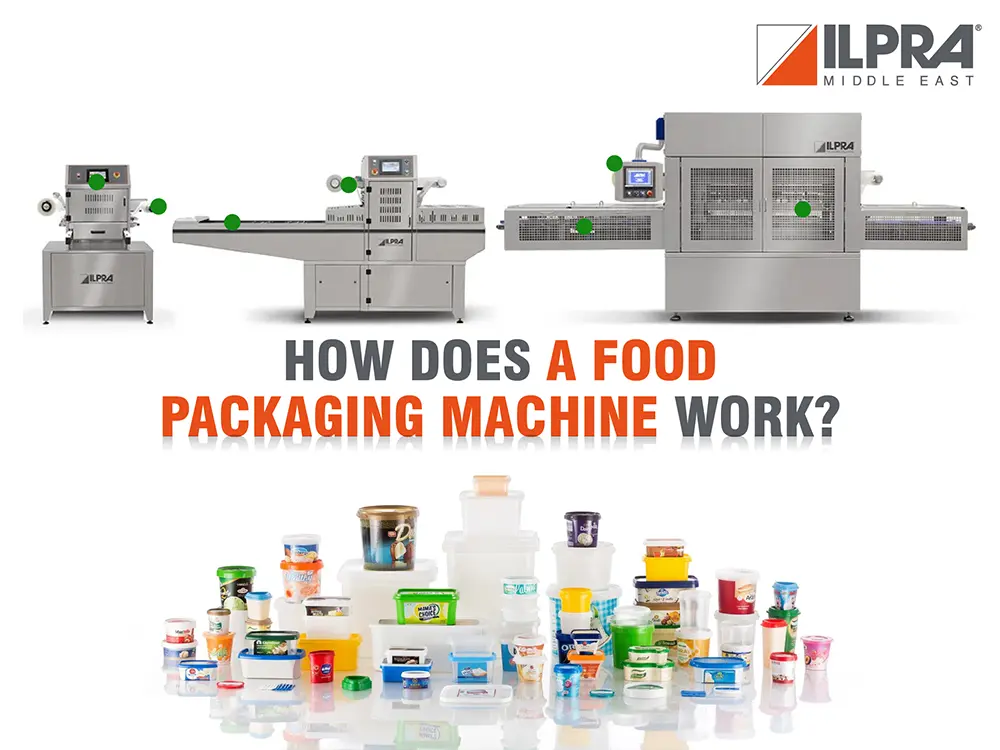
How Does a Food Packaging Machine Work? A Complete Guide for Food Manufacturers
One of the most crucial phases of the food production process is food packaging. Realistically speaking, no matter how good a food product one may be, it could be influenced by bad packaging and its results could be in form of its freshness, safety, shelf life, and even its marketability. That is why food manufacturers are dependent on food packaging machines to package products fast, accurately and hygienically.
New Food packaging machines have revolutionized the food business by automation of work which previously was done manually. Ranging between weighing and filling, labelling, as well as packing, these machines assist companies to boost productivity without compromising the quality of the products.
But how does a food packaging machine actually work?
In this guide, we’ll explain the working process of food packaging machines, the different types available, and how they help food businesses streamline operations and reduce costs.
What Is a Food Packaging Machine?
A food packaging machine is the machine that is used to automate the process of packing food products into bags, pouches, trays, containers, cartons or any other food packaging types.
These consist of machines that are commonly used in:
- Snacks
- Rice and grains
- Frozen foods
- Coffee
- Spices
- Dairy products
- Bakery items
- Ready-to-eat meals
- Confectionery products
A food packaging machine can have one or several packaging operations on a single integrated machine, depending on the production setup.
Why Food Packaging Machines Are Important
Speed and consistency are a necessity in the modern competitive food industry. Hand paper wrapping can be ineffective, manual and often subject to error.
Food packaging machines help businesses:
- Increase production efficiency
- Improve packaging accuracy
- Maintain food safety standards
- Reduce labour costs
- Minimise product waste
- Enhance packaging consistency
- Extend product shelf life
Automated packaging is a common production requirement in manufacturers dealing with thousands of products on daily basis.
How Does a Food Packaging Machine Work?
Although the machines vary, the majority of food packaging systems are similar with regards to the progression. The product is fed into the machine, where the right amount is measured, then the machine stuffs it into a package, sealing the package and it is ready to go out.
Let us examine each of the stages.
Step 1: Product Feeding
The packaging process begins with feeding the food product into the machine.
Depending on the product type, manufacturers may use:
- Conveyor systems
- Hopper feeders
- Vibratory feeders
- Bucket elevators
- Manual loading systems
To illustrate, potato chips could be brought along by a bucket elevator and liquids by pumping them directly into the fill system.
The aim here is to make sure there is a smooth and regulated traffic of the products into the pack section.
Step 2: Weighing and Portioning
One of the most important stages in food packaging is accurate weighing.
Before packaging, the machine must determine the exact amount of product that will go into each package.
This is typically achieved using:
- Multihead weighers
- Combination weighers
- Checkweighers
- Digital weighing systems
Accurate weighing helps manufacturers:
- Maintain product consistency
- Reduce product giveaway
- Meet regulatory requirements
- Improve profitability
To illustrate this as an example, a snack manufacturer selling 100-gram packets should be able to sell every one with the right amount of snack. A single overfill repeated thousands of times across packages can cause substantial loss of product.
This is the reason why the line food packaging nowadays is commonly equipped with state-of-the-art weighing technology prior to filling.
Step 3: Filling the Package
After weighing the product, it goes to a filling section.
The machine fills the desired packaging with the measured amount.
Information on filling method is dependent on the type of product.
Common Filling Methods
| Product Type | Filling Method |
| المساحيق | Auger filling |
| Liquids | Piston or pump filling |
| Granules | Volumetric filling |
| Snacks | Multihead weighing systems |
| Frozen foods | Combination weighing systems |
The filling process is designed to be fast, accurate, and hygienic.
Step 4: Forming the Package
A lot of the packing machines produce the package during the process of packaging.
To illustrate, Vertical Form Fill Seal (VFFS) machines require a roll of packaging film which it then folds and forms into a pouch or a bag.
In this step, the machine:
- Pulls packaging film from a roll
- Shapes the material into a tube or pouch
- Creates the bag structure
- Prepares it for product filling
This automated process significantly increases packaging speed and reduces material waste.
Step 5: Sealing the Package
After filling, the package must be securely sealed.
Sealing protects the product from:
- Moisture
- Air exposure
- Contamination
- Leakage
- Physical damage
The type of sealing depends on the packaging format.
Common Sealing Methods
- Heat sealing
- Vacuum sealing
- Tray sealing
- Ultrasonic sealing
- Induction sealing
Since snack wrappings are often heat sealed and meat items may get vacuum sealed in order to increase shelf life.
They should be properly sealed as any slight failure of these seals could result in spoilage of products, and might cause customer complaints.
Step 6: Coding and Labelling
After sealing, many food packaging systems automatically print important product information onto the package.
This may include:
- Manufacturing date
- Expiry date
- Batch number
- Product code
- Barcode
- Nutritional information
The use of automated coding and labelling assists in compliance with the regulations in the food industry and enhances the ability of improved product tracing.
In the case of food manufacturers, proper labelling plays an important role in terms of inventory control and consumer protection.
Step 7: Quality Inspection
Modern packaging lines often include automated inspection systems.
These systems verify that every package meets quality standards before shipment.
Common inspections include:
- Weight verification
- Seal inspection
- Metal detection
- Label verification
- Leak detection
Packages that fail inspection are automatically removed from the production line.
This helps maintain consistent product quality and reduces the risk of defective products reaching customers.
Step 8: Secondary Packaging
Once individual products are packaged, they are grouped for transportation and distribution.
Secondary packaging may involve:
- Cartoning
- Case packing
- Shrink wrapping
- Palletising
For example, individual snack packets may be placed into retail cartons before being loaded onto pallets for shipping.
This final stage prepares products for storage, transportation, and retail distribution.
Types of Food Packaging Machines
Different food products require different packaging solutions.
Some of the most common food packaging machines include:
Vertical Form Fill Seal (VFFS) Machines
These machines form bags, fill them with products, and seal them in one continuous process.
Commonly used for:
- Chips
- Rice
- Sugar
- Coffee
- Snacks
Vacuum Packaging Machines
Vacuum packaging removes air before sealing.
Ideal for:
- Meat products
- Cheese
- Seafood
- Frozen foods
Tray Sealing Machines
Tray sealers package products in trays covered with protective film.
Common applications include:
- Fresh produce
- Ready meals
- الدواجن
- Fresh meat
Flow Wrapping Machines
Flow wrappers package individual products using continuous film.
Often used for:
- Biscuits
- Chocolate bars
- Bakery products
Filling Machines
Filling systems dispense precise quantities of liquid, powder, or granular products into containers.
Frequently Asked Questions
What does a food packaging machine do?
A food packaging machine automates the process of weighing, filling, sealing, labelling, and preparing food products for distribution.
How does a packaging machine measure food accurately?
Most systems use digital weighing equipment such as multihead weighers and checkweighers to ensure precise portion control.
What is the purpose of sealing in food packaging?
Sealing protects food products from contamination, moisture, oxygen, and spoilage while helping maintain freshness.
Can one machine perform multiple packaging functions?
Yes. Many modern packaging systems combine weighing, filling, sealing, coding, and inspection functions into one integrated production line.
Why is automation important in food packaging?
Automation improves efficiency, consistency, productivity, and food safety while reducing labour costs and packaging errors.
Conclusion
The knowledge on the operation of a food packaging machine assists manufacturers in making well informed decisions when it comes to their production processes. Starting with feeding and weighing, then filling, sealing, inspection, and final packaging, each department has a great role in ensuring quality and efficient operations of food.
Recent food packaging machine allows companies to package their products more safely, more hygienically and more accurately than ever before. These machines enhance profitability, better consistency and reduce waste when used together with highly developed weighing systems.
With food production steadily increasing and progressing, automated packaging systems will become an essential spending point of manufacturers that want to achieve greater efficiency, quality management, and sustainability in their businesses.