
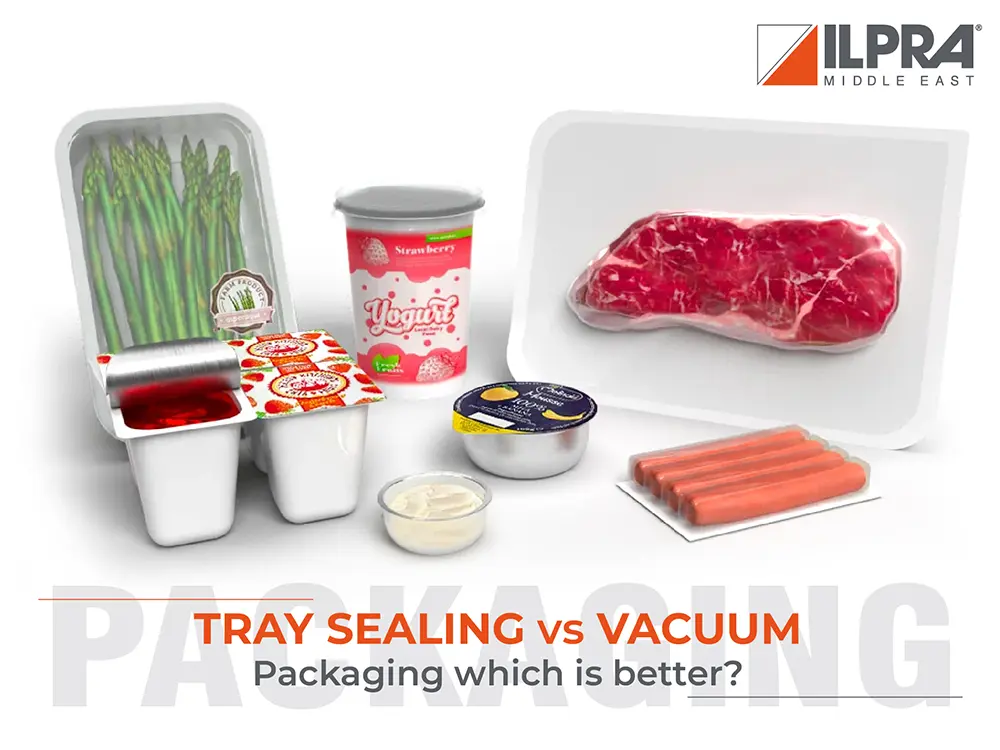
Tray Sealing vs Vacuum Packaging: Which Is Better for Food Packaging?
Selection of the proper packaging technique is amongst the most crucial choices made by food manufacturers, processors, retailers and distributors. The packaging one uses has a direct effect on the product freshness, shelf life, efficiency in transportation, food security and satisfaction among customers.
Tray sealing and vacuum packaging are two of the most common ways of packaging food nowadays. They both have distinct benefits and are tailored to address various product needs. Nevertheless, numerous companies find it challenging to decide what one of them is more suitable for their operations.
The solution varies based on the nature of product, shelf life needs, packaging budgets, branding objectives, and output.
Here in this guide, we will compare tray sealing vs vacuum packaging, how each works as well as assist you in deciding which solution is better suited to your food packaging.
Understanding Tray Sealing
Tray sealing is a packaging product that uses pre-prepared trays and gaskets them using plastic film to seal the food products. The process forms a protective film that inhibits contamination of the product but keeps it fresh.
Tray sealing is used to commonly seal:
- Fresh meat and poultry
- Ready-to-eat meals
- Seafood products
- Fresh fruits and vegetables
- Dairy products
- Convenience foods
The Modified Atmosphere Packaging (MAP) option with the replacement of air in the package by a given gas mixture is also available in modern tray sealing systems to prolong the shelf life of products.
How Tray Sealing Works
The process typically involves:
- Filling the tray with the product
- Positioning the tray inside the sealing machine
- Applying heat and pressure
- Sealing the film onto the tray
- Optional gas flushing for extended freshness
The result is a professional-looking package that offers excellent product visibility and shelf appeal.
Understanding Vacuum Packaging
Vacuum packaging is used to remove the air outside the package, then capped. Vacuum packaging prevents bacteria growth and oxidation by removing oxygen, increasing food preservation time.
Vacuum packaging is mostly employed in:
- Meat products
- Cheese
- Seafood
- Processed foods
- Frozen products
- Coffee and dry foods
Vacuum packaging is commonly preferred when the shelf life of foods is the primary objective due to the fact that oxygen is one of the leading causes of spoilage in foods.
How Vacuum Packaging Works
The process generally includes:
- Placing the product inside a vacuum pouch
- Removing air from the package
- Sealing the pouch tightly
- Creating an oxygen-reduced environment
This creates a compact package that protects products during storage and transportation.
Tray Sealing vs Vacuum Packaging: Quick Comparison
| Feature | Tray Sealing | Vacuum Packaging |
| Product Presentation | Excellent | Moderate |
| Shelf Life Extension | Good to Very Good | Excellent |
| Product Visibility | High | High |
| Packaging Appearance | Premium | Functional |
| Storage Efficiency | Moderate | Excellent |
| Transportation Efficiency | Moderate | High |
| Protection Against Oxidation | Good | Excellent |
| Suitable for Delicate Foods | Excellent | Can compress products |
| Consumer Convenience | High | Moderate |
| Packaging Material Usage | Higher | Lower |
Product Appearance: Which Looks Better?
Appearance is important in case of retail locations.
The presentation of tray-sealed packaging is also more appealing as items are not altered in natural form once they are placed in a tray. This is especially true in fresh foods, like those found in the supermarkets.
Tray-sealed products are thought to have the advantage that they:
- Look fresher
- Are easier to inspect
- Have stronger shelf presence
- Support premium branding
Product Vacuum packaging may sometimes compress products and this is particularly true of soft foods that may not be considered visual.
Winner: Tray Sealing
If product presentation and retail display are priorities, tray sealing is typically the better choice.
Shelf Life: Which Keeps Food Fresh Longer?
When it comes to shelf life, vacuum packaging often has the advantage.
By removing oxygen from the package, vacuum systems help slow:
- Bacterial growth
- Oxidation
- Moisture loss
- Food spoilage
For products such as meat, cheese, and seafood, vacuum packaging can significantly extend freshness compared to standard packaging methods.
Tray sealing with Modified Atmosphere Packaging can also deliver excellent shelf-life performance, but vacuum packaging generally provides stronger oxygen control.
Winner: Vacuum Packaging
For maximum shelf-life extension, vacuum packaging is usually the preferred option.
Product Protection During Transportation
Transportation can expose food products to vibration, stacking pressure, and handling impacts.
Tray-sealed packages provide structural support that helps protect delicate products from damage.
Examples include:
- Fresh berries
- Prepared meals
- Bakery products
- Soft produce
Vacuum packaging offers excellent protection against contamination but may not provide the same structural support for fragile foods.
Winner: Tray Sealing
Delicate food products often benefit from the added protection provided by trays.
Storage and Space Efficiency
Storage efficiency is particularly important for manufacturers, warehouses, and distributors.
Vacuum packaging creates compact packages by removing excess air. This allows businesses to store and transport more products within the same space.
Benefits include:
- Reduced storage requirements
- Lower transportation costs
- Improved warehouse efficiency
- Better freezer utilisation
Tray-sealed products generally require more space because of the rigid tray structure.
Winner: Vacuum Packaging
For businesses focused on storage and logistics efficiency, vacuum packaging offers a clear advantage.
Consumer Convenience
Modern consumers value packaging that is easy to handle, store, and use.
Tray-sealed products often offer:
- Easy product visibility
- Convenient storage
- Attractive presentation
- Improved shelf organisation
Many tray-sealed packages also feature peelable films and resealable options.
Vacuum packs are highly effective but may require cutting tools to open and can sometimes be less convenient for everyday use.
Winner: Tray Sealing
For consumer experience and retail convenience, tray sealing generally performs better.
Packaging Costs: Which Is More Cost-Effective?
Cost comparisons depend on production scale and packaging requirements.
Tray sealing often involves:
- Tray materials
- Sealing films
- Additional packaging components
Vacuum packaging typically requires fewer materials, resulting in lower packaging costs for many applications.
However, the total cost should also account for:
- Shelf-life benefits
- Product protection
- Brand presentation
- Distribution requirements
Winner: Vacuum Packaging
From a material usage perspective, vacuum packaging is often the more economical option.
Frequently Asked Questions
Is tray sealing better than vacuum packaging?
Neither method is universally better. Tray sealing excels in presentation and product protection, while vacuum packaging is superior for shelf-life extension and storage efficiency.
Which packaging method keeps food fresh longer?
Vacuum packaging generally provides longer shelf life because it removes oxygen from the package.
Is tray sealing more expensive?
Tray sealing often requires additional packaging materials, which can increase packaging costs compared to vacuum packaging.
Which method is better for fresh meat?
Both are widely used. Tray sealing is often preferred for retail display, while vacuum packaging is commonly used for longer-term storage and distribution.
Can tray sealing and vacuum packaging be combined?
Yes. There are sophisticated packaging systems that integrate tray sealing and vacuum to attain the advantages of product presentation coupled with freshness.
Conclusion
When comparing tray sealing vs vacuum packaging, the right choice depends on your specific product requirements and business objectives. Tray sealing presents itself better in terms of presentation, visibility of products and convenience to consumers hence will be best suited in cases when retail applications are of interest. Vacuum packaging, however, is best in shelf-life maintenance, storage performance and product preservation.
Businesses should not determine that a single solution is better that others, but instead, consider the product type, distribution needs, branding objectives, and packaging expenses. In most situations, the most effective food producers strategically employ both forms of packaging across various product lines.
No matter the type of packaging system to adopt, it is imperative to incorporate the correct digital weighing machinery in your packaging process because it guarantees consistency, less wastage and better efficiency in the operations.