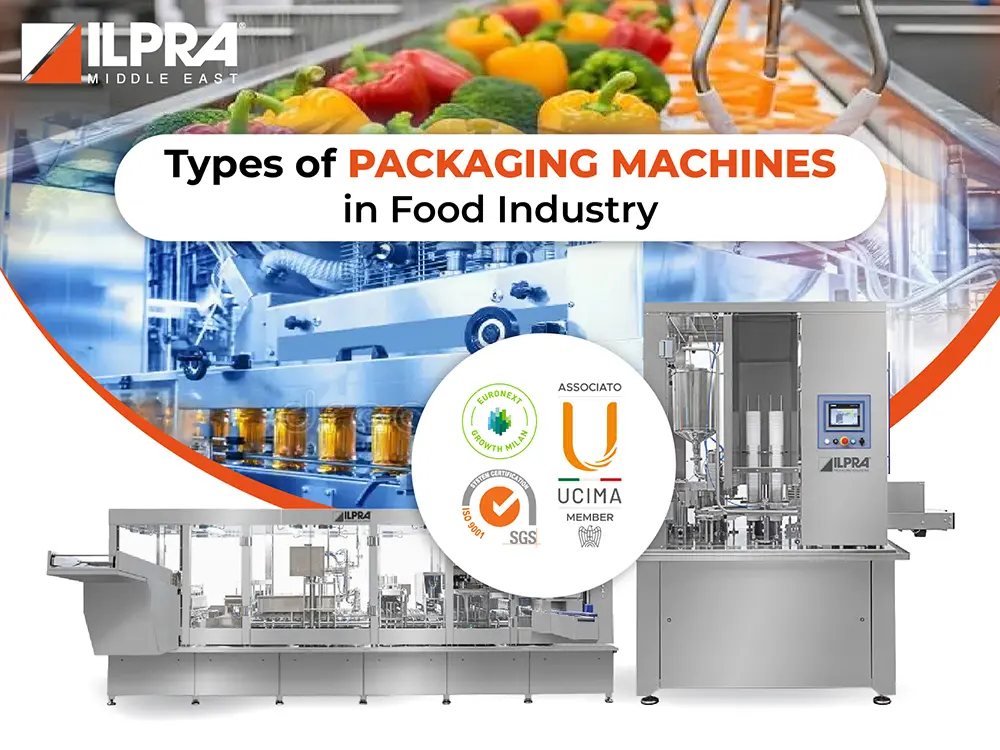
Types of Packaging Machines in Food Industry
Food packaging has a direct effect on product quality, shelf life, hygiene, and customer trust. A well-packed food item stays fresh for longer, looks better on the shelf, and reaches the buyer without leakage or damage.
The types of packaging machines in the food industry depend on the product being packed. A machine used for biscuits will not work the same way as one used for sauces, meat, dairy products, or frozen food. Food manufacturers need to consider product texture, packing speed, container type, storage conditions, and daily production before choosing a machine.
Some businesses need a full automatic packing line. Others only need a compact sealing or filling machine. The right choice depends on the scale of work and the type of food product.
Why Food Packaging Machines Are Important
Manual packing may work for a very small setup, but it becomes difficult as orders increase. Workers may fill different quantities, seals may not close properly, and packing can take too much time.
A suitable food packing machine helps a business maintain the same pack size and weight throughout production. It also reduces direct hand contact with food, which supports better hygiene.
Food packaging machinery can help with:
- Faster packing
- Accurate filling
- Strong and clean seals
- Better product presentation
- Lower food waste
- Longer shelf life
- Reduced labour pressure
The machine should match the product. Trying to use the wrong equipment may lead to leakage, damaged packs, or wasted packaging material.
1. Filling Machines
Filling machines place a fixed quantity of food into a bottle, pouch, jar, tray, or container. They are commonly used for oils, juices, milk, sauces, spices, flour, rice, sugar, and other food products.
Different products need different filling systems. Thin liquids such as water or juice need a different setup from thick products such as ketchup, honey, or mayonnaise.
Powder filling machines are often used for coffee, flour, spices, protein powder, and seasoning. A well-calibrated machine helps avoid underfilling and overfilling.
This is especially useful for businesses that want every pack to carry the same quantity.
2. Form-Fill-Seal Machines
A form-fill-seal machine performs three jobs in one process. It creates the pouch from a roll of film, fills the product, and seals the packet.
This type of packing machine for food products is widely used for:
- Chips
- Namkeen
- Pulses
- Rice
- Sugar
- Dry fruits
- Frozen food
Vertical form-fill-seal machines are common for loose products that fall easily into the pouch. Horizontal machines are more suitable for fixed-shape products such as biscuits, cakes, and chocolate bars.
These machines work well for businesses handling large production volumes.
3. Vacuum Packaging Machines
Vacuum packaging machines remove air from the pack before sealing it. Less air inside the pack can slow down oxidation and help preserve freshness.
Meat shops, seafood suppliers, restaurants, cheese producers, and commercial kitchens often use vacuum packing.
It is suitable for:
- Fresh meat
- الأسماك
- Cheese
- Marinated food
- Cooked meals
- Processed meat
Vacuum packing can improve storage life, but the product still needs the correct refrigeration or freezing temperature. Packaging alone cannot replace proper food storage.
4. Tray Sealing Machines
Tray sealing machines cover a filled tray with a sealing film. These machines are often used for ready meals, fresh meat, seafood, bakery items, fruits, vegetables, and takeaway food.
A basic tray sealer closes the tray with heat. Advanced machines may remove air or replace it with a controlled gas mixture. This method is known as modified atmosphere packaging.
Companies such as Ilpra provide tray sealing systems for different production levels. Before selecting one, businesses should check the tray size, sealing speed, film type, cleaning process, and gas flushing options.
Tray sealing works well when the product needs a clean, strong, and presentable pack.
5. Flow Wrapping Machines
Flow wrapping machines wrap a product in a continuous film and seal it from the sides and ends. They are commonly used for food items that have a fixed shape.
Examples include:
- Biscuits
- Bread
- Chocolate bars
- Cookies
- Cakes
- Protein bars
- Fresh produce
A flow wrapper can pack items quickly and gives the product a neat retail finish. It is a common commercial food packaging machine in bakeries and snack factories.
6. Shrink Wrapping Machines
Shrink wrapping uses plastic film and heat. The film tightens around the product or a group of products after passing through a heat tunnel.
Food companies use shrink wrapping for bottled drinks, cans, cartons, trays, and multipacks. It protects products during storage and delivery.
For example, six water bottles can be packed together in one shrink-wrapped bundle. This makes handling and transport easier.
The packaging film should be suitable for food use, and the heat setting must match the product.
7. Sealing and Capping Machines
Sealing machines close pouches, packets, trays, and containers. Capping machines tighten lids or caps on bottles and jars.
They are widely used for:
- Pickles
- Sauces
- Juices
- Edible oil
- Jam
- Dairy products
- Spices
A poor seal may cause leakage, contamination, or spoilage. This is why businesses should regularly inspect sealing temperature, pressure, and alignment.
Some machines also use induction sealing to place a foil seal under a bottle cap. This helps prevent tampering.
8. Labelling and Coding Machines
Food packs must carry clear product information. Labelling and coding machines print or apply important details such as:
- Product name
- Batch number
- Manufacturing date
- Expiry date
- Price
- Barcode
Clear coding helps with stock control, product tracking, and food safety checks. It also gives customers the information they need before buying.
Food Packaging Machines for Small Business
A small business does not always need a large automatic line. Compact and semi-automatic machines can handle regular production without taking up too much space.
Useful food packaging machines for small business include:
- Tabletop vacuum sealers
- Manual tray sealers
- Impulse sealing machines
- Small liquid fillers
- Semi-automatic powder fillers
- Label applicators
Before buying, check the number of packs required each day. Also measure the available space and calculate the cost of electricity, film, spare parts, and maintenance.
How to Choose the Right Food Packaging Equipment
Start with the product. Check whether it is liquid, solid, powder, frozen, oily, or fragile. Then decide whether it will be packed in a pouch, bottle, jar, tray, or carton.
You should also check:
| Area | What to Consider |
|---|---|
| Production | Packs needed per hour |
| Product | Texture, temperature, and weight |
| Packaging | Film, tray, bottle, pouch, or jar |
| Hygiene | Cleaning and food-contact surfaces |
| Maintenance | Spare parts and technical support |
| Growth | Future production needs |
Always test the machine with your actual product before making a final decision.
Conclusion
Understanding the types of packaging machines in the food industry makes it easier to choose the right equipment for daily production. Filling machines, tray sealers, vacuum packers, flow wrappers, and coding machines all have different uses.
The right food packaging equipment should protect the product, reduce packing time, maintain hygiene, and produce consistent results. A business should focus on product needs first rather than simply buying the fastest or most expensive machine.
الأسئلة الشائعة
1. Which machine is commonly used for food packaging?
Filling, sealing, vacuum packing, tray sealing, and form-fill-seal machines are commonly used.
2. Which packaging machine is best for snacks?
A vertical form-fill-seal machine is commonly used for chips, namkeen, dry fruits, and similar snacks.
3. Can small businesses use food packaging machines?
Yes. Small businesses can use compact, manual, and semi-automatic machines.
4. What is the use of a vacuum packing machine?
It removes air from the pack and helps food stay fresh for a longer period.
5. What should I check before buying a packaging machine?
Check product type, packing speed, machine size, cleaning needs, packaging material, and maintenance support.