
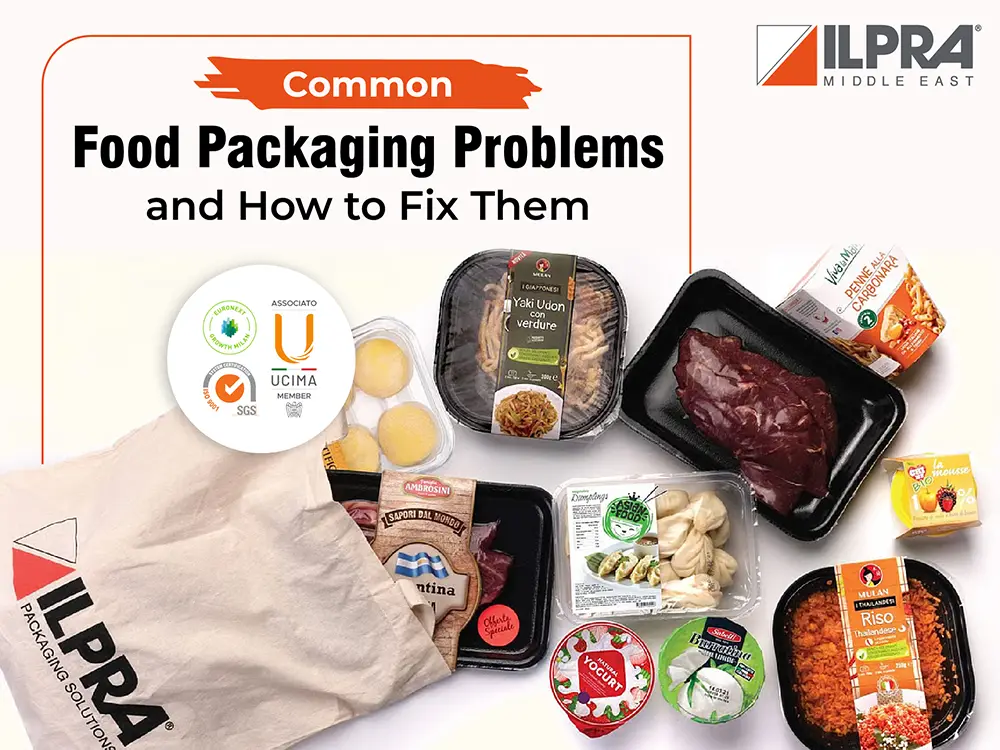
Common Food Packaging Problems and How to Fix Them
If the pack breaks, the food could be cooked to perfection and still end up in a mess. Loose seals, leaking trays, torn film, crushed containers and incorrect filling can all cause a reduction in the quality of a product and create unnecessary waste.
Food packaging is not merely about looking good. It protects food during filling, storage, transportation and display. The right material also helps control moisture, air exposure and contamination.
Problems usually appear when the packaging material, product and machine do not work well together. Regular checks, correct machine settings and suitable materials can prevent most day-to-day packing faults.
Common Food Packaging Problems and How to Fix Them for Better Product Protection
1. Weak or Open Seals
A seal may look closed but still have small gaps. This often happens when food, oil, water or crumbs remain around the sealing edge. Incorrect heat, sealing pressure or contact time can also cause weak seals.
First clean the sealing area and ensure the film is the same as the tray material. In addition, operators also need to check heat and pressure settings when pack sizes or materials change.
For tray-based products, Foodpack and Foodpack Tray Sealers are relevant internal-linking terms because tray sealing is widely used for meat, poultry, seafood, ready meals and other foods.
2. Food Packs Start Leaking
Leaks are common with sauces, liquids, dairy products and prepared meals. Overfilling is one of the main causes because the product reaches the sealing area before closure.
Check fill quantity first, then inspect the container and seal. A damaged tray or incorrectly positioned lid can also cause leakage.
This section may relate to Fill seal or Filling & Sealing Machines for companies that handle products that require precise filling.
3. Film Wrinkles or Moves Out of Position
Wrinkles may seem like a cosmetic problem, but they can also affect seal strength. Poor reel alignment, incorrect tension or unsuitable film often causes the problem.
Check reel placement and film tension before changing temperature settings. The selected
Trays & Film should also suit one another, particularly where heat sealing is involved.
Correct film handling helps improve the appearance of the pack while reducing rejected products.
4. Fresh Food Loses Quality Too Soon
Poor fresh food packaging can allow excess oxygen or moisture to affect the product. Fresh meat may lose colour, vegetables may dry out and prepared food may develop an unattractive appearance.
The correct solution depends on the food. Tray sealing, vacuum packing, skin packaging and controlled-atmosphere formats all serve different purposes.
Businesses comparing forming and sealing options can also explore FORMPACK, Thermoforming Machines and other packing formats designed for different production needs.
5. Chilled Products Develop Moisture Problems
Chilled packaging must deal with condensation and changing temperatures. When a cold product enters a warmer packing area, moisture can collect around the tray or sealing surface.
That moisture may weaken the seal or make labels difficult to apply.
Keep the packing environment controlled and avoid leaving chilled products outside temperature-controlled areas longer than necessary. Packaging films and trays should also perform properly under refrigerated conditions.
6. Pouches Do Not Seal Properly
Pouch packaging works well for sauces, powders, snacks, liquids and many prepared products, but poor alignment can create sealing problems.
Product trapped near the pouch opening, incorrect filling quantities or unsuitable heat settings can cause incomplete seals.
A regular check of the filling nozzle, pouch position and sealing jaws can reduce this problem. Doypack e pouch and Flexible Film Packaging Solutions provide useful internal-link opportunities for businesses exploring pouch packing.
7. Thermoformed Packs Have an Uneven Shape
Thermoforming equipment creates packs by forming material before the product is filled and sealed. Incorrect heating, forming pressure or material choice can result in uneven cavities or thin areas.
Operators should check the forming temperature and make sure the chosen film suits the required pack depth.
For relevant site linking, this section can naturally include Form fill seal, Thermoforming & Filling Machines and Formpack.
8. Packaging Breaks During Transport
A food pack must survive more than the production line. Stacking, warehouse handling and transport can crush trays or damage seals.
Choose packaging with enough strength for the product weight and distribution method. Secondary cartons and proper case arrangement can also reduce movement during transport.
For complete packing line, please refer to End of line & accessories, and Optional Equipments for handling the products after the main packing stage.
9. Packaging Machines Give Different Results
When one pack seals correctly and the next one does not, machine condition may be the problem. Worn sealing plates, dirty sensors, incorrect alignment or changing settings can affect production.
Set a maintenance schedule for all packaging machines. Operators should also record faults instead of repeatedly adjusting settings without finding the cause.
Ilpra supplies different types of Packaging machines for food and other packing applications. The wider Ilpra group range includes equipment for filling, sealing, tray packing, thermoforming and supporting production processes.
10. Choosing the Wrong Packaging Material
Not every material works with every food. Heat, oil, moisture, freezing and storage time can all affect films and containers.
Test packaging with the actual product before committing to large quantities. Companies seeking to reduce their reliance on conventional plastic may also look to biodegradable food packaging, recyclable materials and other lower impact formats.
The material still needs to meet the food’s protection, sealing and storage requirements.
How to Reduce Food Packaging Problems
Most packaging faults can be reduced through simple checks. Match the machine, film and container to the food being packed. Keep sealing areas clean. Check fill quantities. Inspect packs during production and maintain machines at recommended intervals.
When selecting new equipment, consider product type, daily output, pack format and future production needs rather than focusing only on machine speed.
Solutions such as Foodpack, fill seal, formpack, form fill seal can be linked to relevant Ilpra pages so readers can move from the problem they are researching to the right packaging category.
الأسئلة الشائعة
What causes food packaging seals to fail?
Food residue, moisture, incorrect heat, poor pressure and incompatible films or trays can cause seal failure.
How can I prevent food packs from leaking?
Control filling levels, clean sealing edges and regularly check machine settings, trays and films.
Which packaging is best for fresh food?
The right choice depends on the food, shelf-life requirement, temperature and distribution conditions.
What is biodegradable food packaging?
It refers to packaging made from materials designed to break down under suitable biological or composting conditions.
Why should packaging machines be maintained regularly?
Maintenance helps prevent inconsistent seals, equipment downtime, filling errors, and unexpected production stops.